

I almost returned the Sasttie reading pillow before I even used it twice. I know that's not how review openings are supposed to start, but honest is the whole point of this one. I ordered it after three weeks of waking up with a strange knot between my shoulder blades from propping two flat pillows against my apartment's upholstered headboard every night to read before bed.
The knot showed up on the same side every time, which is what finally got me looking for something built for sitting up instead of something meant for lying down and repurposed. The Sasttie kept turning up in searches with a 4.5-star average across more than 3,000 reviews, which is either a genuinely good sign or a sign that a lot of people quietly return it without leaving one. I wanted to find out which.
I'm also the kind of shopper who reads the one-star reviews before the five-star ones, on the theory that the complaints tell you more than the praise does. A handful mentioned firmness, a couple mentioned size, and almost none of them mentioned how long it took to actually feel like the product in the photos. That gap between unboxing and real comfort is most of what this review is about.
The Quick Verdict
Solid back support for reading and working from bed once it breaks in, but it runs bigger and firmer than the photos suggest, and the armrests only earn their keep on certain headboards.
Amazon Check Today's Price →Tired of Stacking Two Flat Pillows Just to Read a Chapter?
If your shoulders are doing the work your headboard should be doing, this is built to fix exactly that. See today's price and current availability before deciding.
Amazon Check Today's Price on Amazon →How I've Used It (And What Surprised Me First)
I've had the Sasttie in daily rotation for about seven weeks now, mostly propped against my headboard for 30 to 45 minutes of reading before bed, and two or three mornings a week for answering emails on my laptop before I actually get up. My husband David tried it exactly once, decided the armrests got in his way, and went back to his stack of two pillows, so this is really a review of how it holds up for one dedicated user rather than a whole household.
The first surprise had nothing to do with comfort. It was the box. The pillow arrives compressed and vacuum sealed, and it takes a full 24 to 48 hours to reach its actual loft once you cut it open. I unpacked mine on a Tuesday night expecting to use it that same evening and ended up back on my flat pillows for two more nights while it slowly filled out.
Once it did fill out, the shape held. I want to be clear about that because a lot of shredded-foam pillows lose structure within a month, and mine hasn't, even with almost daily use since late March.
I also want to mention what I didn't expect going in, which is how much I'd use it outside of actual reading. It's become the thing I prop against for a coffee and fifteen minutes of scrolling before I get out of bed on weekends, which wasn't the use case I bought it for, but it's probably where it earns its keep the most now.
The Firmness Nobody Mentions in the Photos
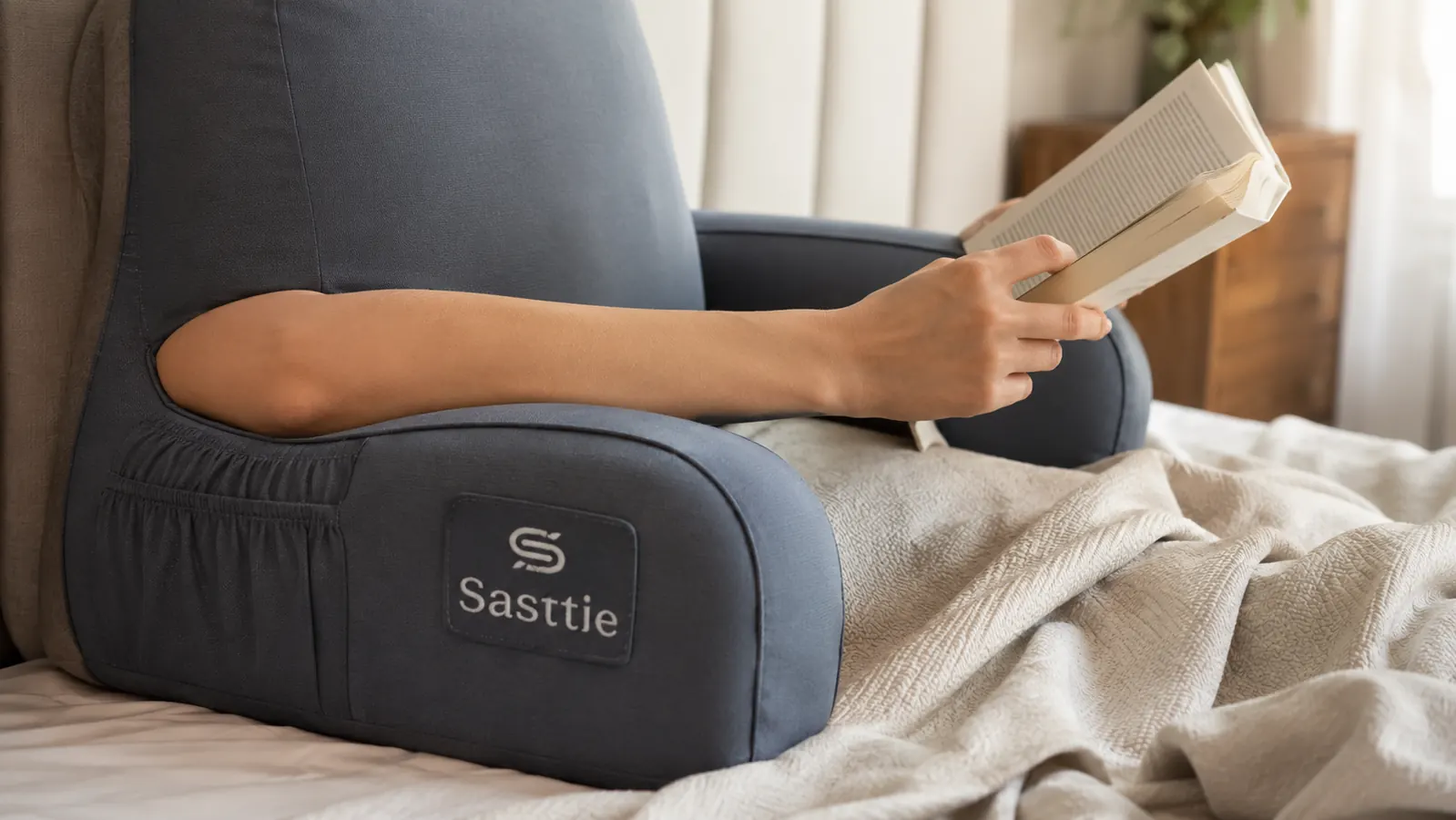
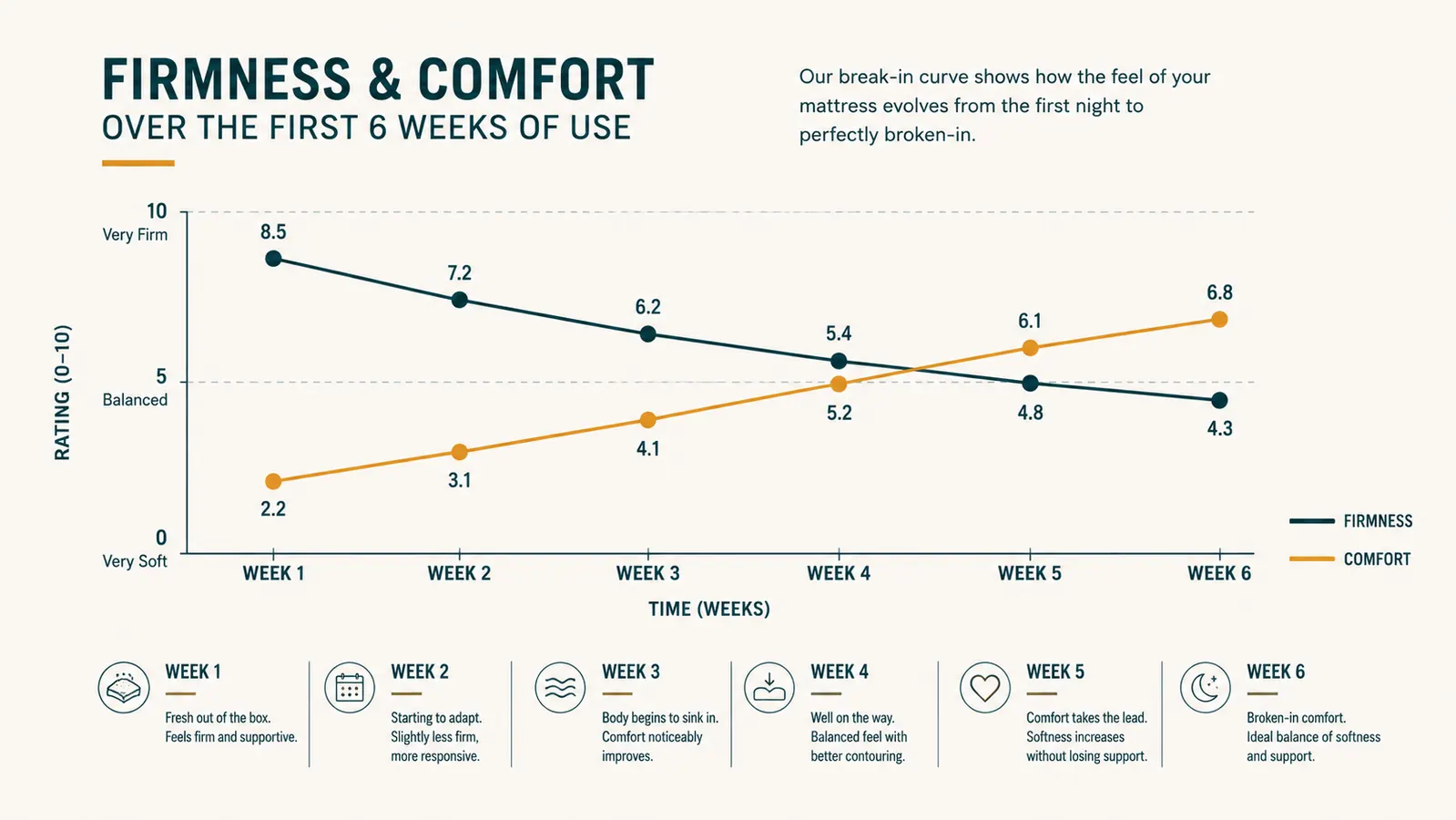
Every photo of the Sasttie makes it look soft and pillowy, the kind of thing you'd sink into. That is not what it feels like the first two weeks. The shredded memory foam fill is dense, and the back panel especially has a firmness closer to a low-end recliner cushion than a bed pillow. I remember sitting against it the first night and thinking I'd made a mistake.
It does soften with use. By about week three, the foam had broken in enough that it stopped feeling like I was leaning against a car seat and started feeling like actual back support. If you're the kind of person who returns things within the first week over a firmness complaint, know that going in, because the week-one version of this pillow and the week-five version are noticeably different products.
I'll also say the firmness is probably why the support holds up. A softer pillow would likely flatten faster under daily use. So the tradeoff seems intentional, even if nobody tells you about the break-in period before you buy.
One thing that helped speed up the break-in was actually sitting against it with real weight instead of just letting it sit on the bed unused. On nights I skipped reading and left it propped up empty, it seemed to hold its stiffness longer than on nights I used it. That's anecdotal, but it tracks with how shredded foam usually behaves.
Sizing: It's Bigger (and Heavier) Than It Looks
The listing gives dimensions, but numbers on a page don't tell you what it's like to actually store the thing. Fully expanded, the Sasttie takes up close to a third of my full-size bed's headboard width. My apartment bedroom is small, and there were mornings I had to physically move it off the bed just to get in.
It's also heavier than a standard pillow, somewhere in the neighborhood of five to six pounds once fully filled. That's not a complaint exactly, the weight is part of why it stays put against the headboard instead of sliding down every time I shift, but if you were picturing something you'd toss around one-handed, recalibrate.
For anyone in a twin or full bed with limited headboard space, measure your actual usable width before ordering. I didn't, and the first week involved some awkward rearranging of my other pillows every night.
Storage during the day became its own small routine. I usually stand it upright in the corner between the headboard and the wall rather than trying to fit it under the other bed pillows, because it doesn't compress back down the way a regular pillow does once it's fully lofted.
The Armrests Are Either Genius or Useless, Depending on Your Bed
The attached armrests are the feature every listing photo highlights, and when they work, they genuinely change the experience. Resting my forearms instead of holding a book or a laptop up in the air for 40 minutes solved the exact shoulder issue that sent me shopping in the first place.
But they only work if your headboard and mattress setup gives the pillow a flat, stable base to sit on. My upholstered headboard has a slight curve to it, and the pillow wants to slide forward off that curve unless I wedge a folded blanket behind it. On a flat wooden headboard, or no headboard at all, I don't think this would be an issue.
I mention this because it's the one thing that would have changed how I set expectations if I'd known ahead of time. If your headboard is curved, padded, or angled, check reviews for your specific setup before assuming the armrests will behave the way they do in the photos.
The Laptop Test: Does It Work as a Desk Chair Substitute
Since I work from home two days a week, I was curious whether this could double as an actual seated workspace, not just a reading prop. I tested it for full mornings on both of my remote days over three weeks, laptop balanced on a lap desk, coffee on the nightstand.
It held up fine for the first 60 to 90 minutes. After that, my lower back started wanting more support than the pillow gives at the base, since it's designed to support the mid and upper back rather than the lumbar area specifically. I ended up rolling a small towel behind my lower back on longer mornings, which fixed it.
So it's not a full desk chair replacement, and I don't think it's marketed as one, but for short stretches of laptop work before officially starting the day, it's genuinely more comfortable than what I was doing before, which was nothing, just a headboard and bad posture.
Six Weeks In: Where the Actual Wear Shows Up
The spot that's shown the most wear isn't the back panel, it's the underside where the pillow contacts the mattress. There's a slight flattening there from nightly weight, though it's not dramatic and doesn't affect how it feels sitting against it.
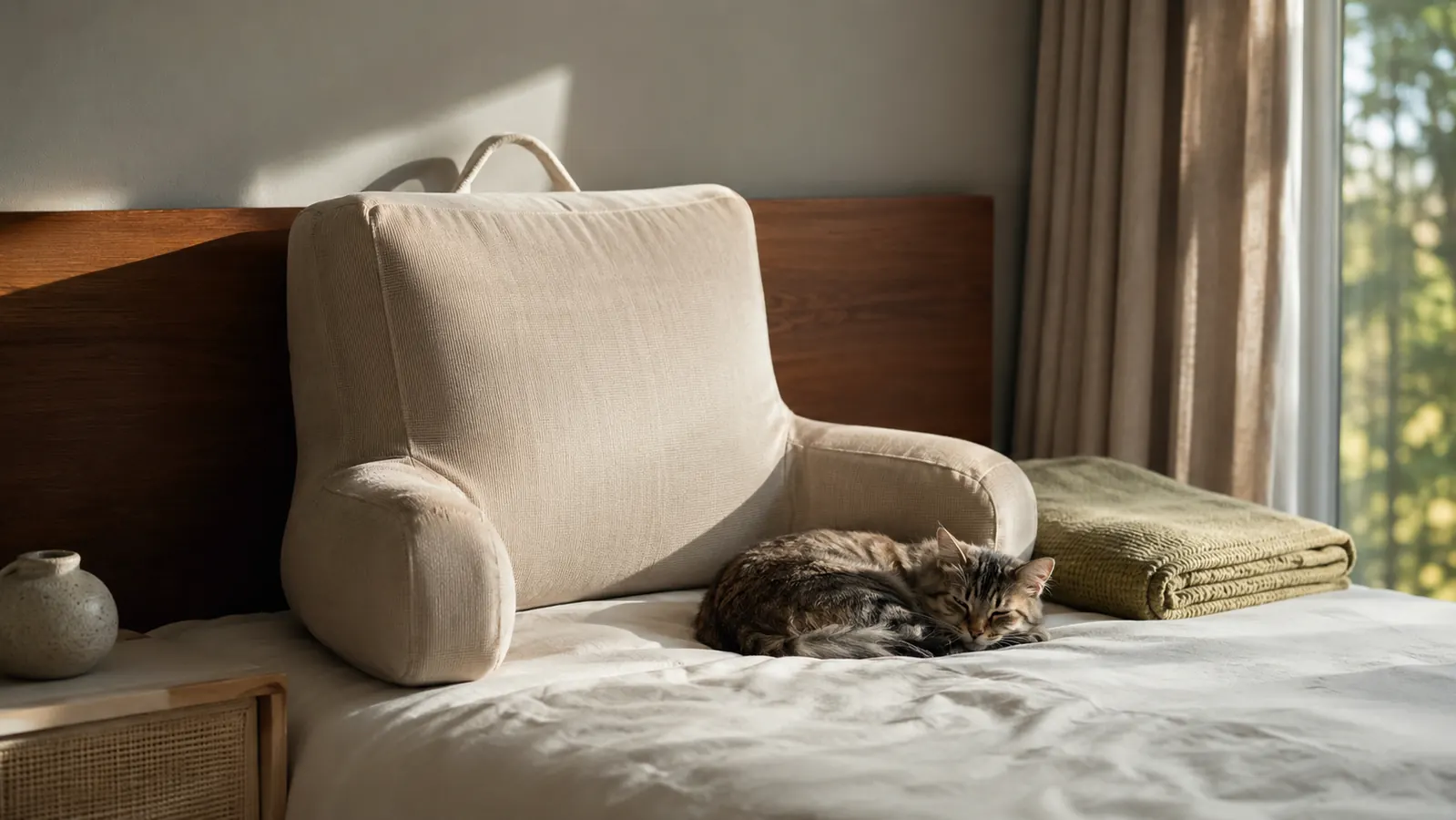
The zipper cover has held up fine through two washes. I pulled it off around week four after Biscuit, our cat, decided the armrest looked like a good napping spot and left a layer of fur behind. It went through a normal cold wash and came out fitting the same as before, which isn't something I take for granted with fill-shifts-in-the-cover type pillows.
The fill itself hasn't needed fluffing or redistributing, which surprised me. I expected some clumping by now given how often I use it, and so far the shredded foam has stayed even across the back panel.
There was a faint chemical smell straight out of the packaging, which is common with foam-fill products but worth flagging since a few reviews mentioned it as a dealbreaker. It faded within about three days of airing out near an open window and hasn't come back, even after the washes, but if you're sensitive to new-product smells, plan to let it sit somewhere ventilated before your first night with it.
What I Compared It to Before Buying
Before settling on the Sasttie, I looked at two wedge-style backrest pillows and one bamboo-shaped bolster setup. The wedges were cheaper but had no armrests and less back height, which meant less actual support for my mid-back. The bolster option looked more premium in photos but had reviews mentioning it going flat within a couple of months.
The Sasttie won mostly on the combination of back height and armrests together. I haven't found another option at a similar price with both features that also holds its shape past the first month, though I'll admit my search wasn't exhaustive.
Is It Worth the Trouble of the Break-In Period
Here's the honest math I ran on myself around week five, when I was deciding whether to keep it or start over with something else. Two weeks of feeling like I'd made a mistake, against seven weeks and counting of actually reaching for it every night without thinking twice. The break-in period stopped feeling like a flaw and started feeling like a cost I paid once.
Compare that to the wedge pillows I almost bought instead, which reviewers described as comfortable immediately but flat within eight to ten weeks. I'd rather be uncomfortable for two weeks and supported for months than comfortable for two weeks and back to square one by early summer.
That said, this only holds up if you actually use it daily during the break-in window. If you're the type to buy something, use it twice, and let it sit, you'll never get past the stiff phase and you'll end up judging the whole product on its worst version.
What I Liked
- Armrests genuinely reduce arm and shoulder fatigue during reading or laptop use
- Shape and firmness have held up through almost two months of near-daily use
- Removable cover machine washes without shrinking or losing fit
- Enough back height to support mid-back, not just lower back
Where It Falls Short
- Ships compressed and needs 24-48 hours to reach full loft, plan ahead
- Noticeably firm for the first two to three weeks of use
- Bulky and heavy, awkward for smaller beds or shared headboard space
- Armrests slide on curved or padded headboards without something wedged behind them
The version of this pillow you get in week one and the version you get in week five are not the same product, and nobody tells you that up front.
Who This Is For
This makes sense for anyone who reads, works, or watches something from bed on a regular basis and has a flat or mostly flat headboard to prop it against. If shoulder or arm fatigue from holding a book or laptop is the actual problem you're trying to solve, the armrests earn their keep here.
It also suits patient buyers more than impatient ones. If you're willing to let it loft up for a couple of days and use it through the firm stretch before judging it, you'll likely end up where I did. If you expect it to feel finished the moment it's out of the box, it will disappoint you.
I'd also put frequent travelers in the 'this is for you' camp, oddly enough. I started packing a flatter travel pillow alongside it for hotel stays after realizing how much I missed the back support on trips, which wasn't something I expected to care about before owning this one.
Who Should Skip It
If your headboard is curved, heavily padded, or you don't have one at all, skip it or plan on wedging something behind it for stability, because the armrests lose most of their value once the pillow starts sliding. Anyone in a narrow twin bed shared with a partner should measure first too. The size that makes this pillow supportive is the same size that makes it a tight fit in a small space.
Ready to Stop Propping Two Flat Pillows Against Your Headboard?
Give it the 24 to 48 hours it needs to loft up and a few weeks to break in, and the support case makes sense. Check current price and stock before it's back-ordered.
Amazon Check Today's Price on Amazon →