
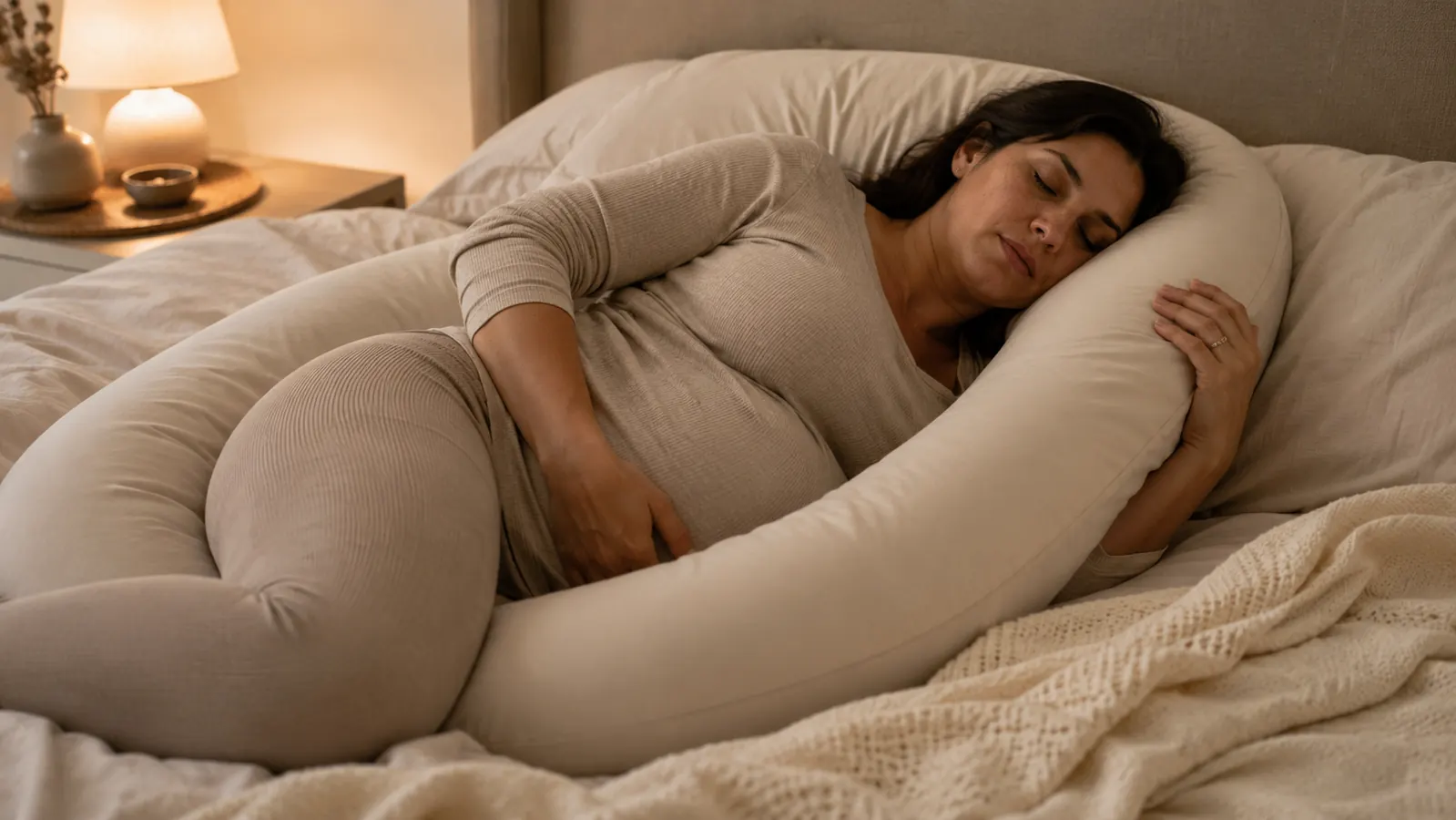
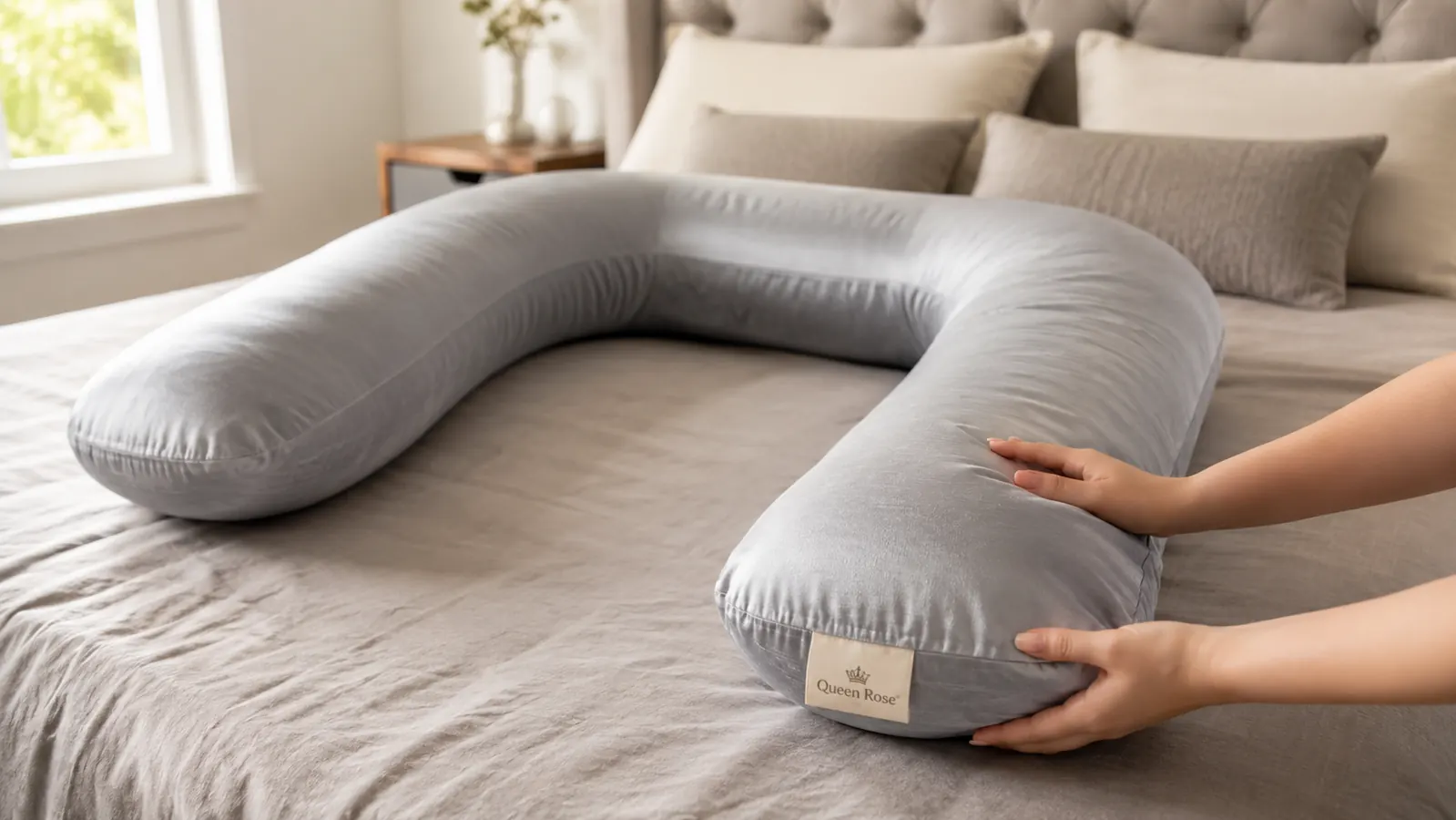
Short answer: if you're past the first trimester and waking up with hip pain, a dead arm, or a pillow fort that's collapsed by 3 a.m., the Queen Rose U-Shaped Pregnancy Pillow is worth the switch. I tried to make it through this pregnancy on the same two pillows I'd used for a decade, propping one under my belly and one between my knees, and by week 22 I was waking up four or five times a night to re-stack them. The Queen Rose pillow isn't magic, but it solved a specific mechanical problem that a regular pillow simply isn't shaped to solve, and it did it faster than I expected.
I'm going to walk through exactly where the U-shaped pillow earns its keep, where a regular pillow still does the job fine (and is honestly easier to deal with), and who I'd tell to skip the upgrade entirely. I bought the 55-inch Queen Rose in the cooling silky cover about ten weeks ago, and I've slept on both setups enough nights in a row, including a deliberate week-by-week comparison, to trust what I'm about to tell you.
| Queen Rose Pregnancy Pillow | a Regular Pillow | |
|---|---|---|
| Price | $39.99 today's price | $0 to $15 (pillows most people already own) |
| Shape | Full U-shape, wraps head to knees on both sides | Rectangular, one pillow at a time |
| Zones supported at once | Head, neck, back, belly, and knees simultaneously | One or two zones, requires manual repositioning |
| Fill material | Poly-cotton blend fiberfill, holds loft over months | Varies, often flattens or clumps within a year |
| Cover | Removable cooling silky cover, machine washable | Standard pillowcase, machine washable |
| Bed space required | Takes up most of a queen bed, partner may need a guest room or a larger mattress | Minimal, leaves room for a partner |
| Portability | Bulky, awkward for travel or hospital bag | Easy to grab and carry anywhere |
| Repositioning needed overnight | Rare, one adjustment usually holds until morning | Frequent, especially after rolling over |
| Postpartum usefulness | Doubles as a nursing support and side-sleeping aid after birth | Limited, back to being just a pillow |
Where the Queen Rose Pregnancy Pillow Wins
The whole reason I caved and bought this thing was hip pain. Around week 20, sleeping on my side started to feel like lying on a bag of gravel. A regular pillow between the knees helps with hip alignment, but it does nothing for your lower back or the ache that shows up under your belly when there's no support holding it level with your spine. The Queen Rose wraps all the way around, so my head rests on one curve of the U, my back leans into the outer edge, my belly sits cradled in the lower curve, and my top knee rests on the opposite side. That's four points of support from one object, and I stopped needing to wake up and rebuild my pillow pile every time I rolled over.
The cooling silky cover matters more than I expected too. I run hot at night even without being pregnant, and by the second trimester I was waking up sweaty no matter what the thermostat said. The cover on this pillow has a noticeably cooler hand-feel than a standard cotton pillowcase, and because it's removable I can wash it every week or two without stripping the whole bed. My husband Marcus noticed I was tossing and turning less within the first week, which for him meant he was also sleeping better, since half of my old wake-ups involved elbowing him for space while I repositioned pillows.
There's also a durability difference I didn't expect to care about. The two regular pillows I'd been using were both flattening in the middle after years of normal wear, which meant even a good position stopped holding its shape by 2 a.m. The Queen Rose's fill hasn't compressed noticeably in the ten weeks I've had it, even though it's under constant weight from my belly and legs every single night. A regular pillow does this job for a month or two before it needs fluffing or replacing. This one has held its loft the whole time, and I expect it to keep holding up through the rest of the pregnancy.
Where a Regular Pillow Wins
I want to be honest here because it would be easy to just tell you the $40 pillow fixes everything. It doesn't, and there are real reasons a regular pillow still has a place in this comparison. First, space. The Queen Rose is 55 inches and it does not compromise on our queen bed. Marcus ended up on the couch more nights than either of us wanted to admit before we finally upgraded to a king mattress, which was its own unplanned expense. If you're in a full or queen bed and sharing it with a partner, a regular pillow between your knees takes up almost no room and doesn't turn bedtime into a negotiation over territory.
Second, portability. When I stayed at my mother's house for a weekend in month six, I grabbed two pillows off her guest bed and made do. I would not have packed the U-shaped pillow into a car for a weekend trip, and I definitely wasn't bringing it to the hospital, even though some people do. If you travel often, sleep in different beds regularly, or just don't want a single-purpose object taking up closet space for nine months, a regular pillow (or two) is genuinely the lower-friction choice, and it's not a bad one.
Third, there's no learning curve. You already know how to use a regular pillow. There's no adjustment period, no figuring out which curve goes where, no relearning how to get in and out of bed without knocking half of it onto the floor. If your discomfort is mild and occasional rather than nightly, a regular pillow gets you most of the benefit for a fraction of the cost and none of the bulk, and that's a completely reasonable trade to make.
Stop rebuilding your pillow fort at 3 a.m.
The Queen Rose U-Shaped Pregnancy Pillow supports your head, back, belly, and knees in one piece, so you're not waking up to reposition four different cushions every time you roll over.
Amazon Check Today's Price on Amazon →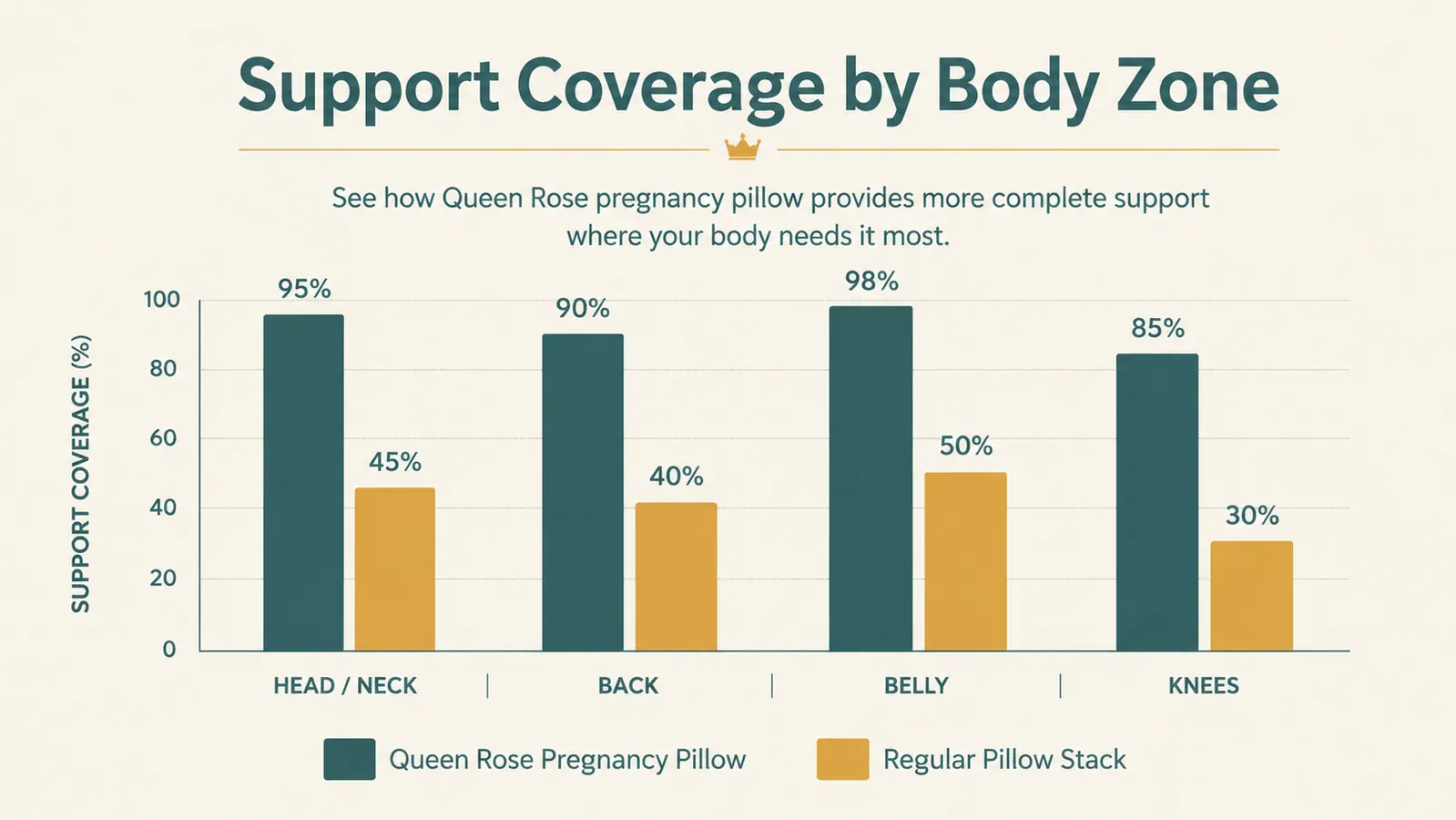
What Changed When I Actually Switched Full-Time
I tracked it loosely for two weeks, one week on my old two-pillow setup and one week on the Queen Rose. On the regular pillow week, I logged waking up fully (not just stirring) an average of 4.3 times a night, mostly to reposition or because my hip had gone numb. On the Queen Rose week, that dropped to about 1.8 times, and most of those wake-ups were bathroom trips, not discomfort. That's not a scientific study, it's one tired woman with a notes app, but the difference was big enough that I noticed it during the day too. I had more patience at work and fewer 2 p.m. crashes, and my lower back stopped aching the moment I sat down for the first hour of the day.
The other thing that surprised me was how it changed my sleep position habits. Before, I'd wake up on my back more often than I meant to, which every prenatal appointment reminds you to avoid in the third trimester. Because the U-shape physically boxes you into a side-lying position, I stopped drifting onto my back overnight without realizing it. That wasn't the reason I bought the pillow, but it turned out to be one of the more reassuring side effects, and it's the one I mention most often when friends ask if it's worth it.
I didn't need a pillow that looked impressive. I needed one that let me stay asleep for more than ninety minutes at a stretch.
The Trade-Offs Nobody Really Mentions
Washing the whole thing is a project. The removable cover is easy, that goes in the machine like any pillowcase. But the inner fiberfill body of the pillow is bulky and most home washers can't handle it, so if you have an accident, a spill, or just want a deep clean, you're looking at a laundromat trip with a large-capacity machine, or spot cleaning. It's not a dealbreaker, but it's not a five-minute chore either.
It also took about three nights to stop feeling like I was sleeping inside a cushioned hallway. The size that makes it supportive also makes it a little disorienting at first, especially if you're used to a minimal setup. By night four it felt normal, and now sleeping without it feels wrong, but I'd rather tell you the adjustment period is real than pretend it's comfortable from the first night.
How I Actually Use It Alongside a Regular Pillow
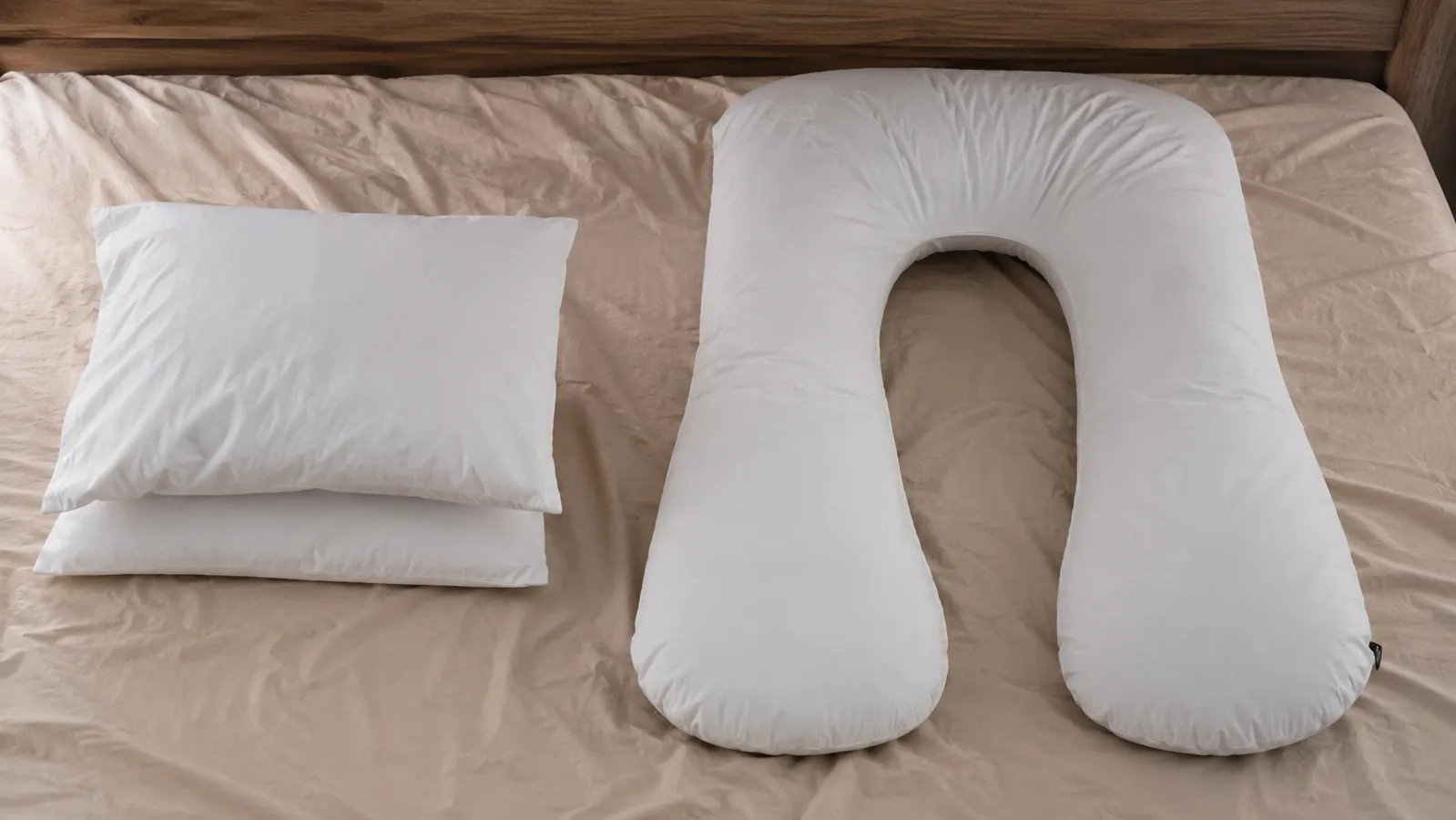
I didn't fully retire my old pillows, and I don't think most people need to. I still keep one flat regular pillow on the bed for propping my upper back a little higher when heartburn flares up, which the U-shape doesn't do on its own. The two setups aren't really competitors so much as different tools. The Queen Rose handles the nightly baseline of support, and a regular pillow fills in the occasional gap, like elevating my chest after a spicy dinner or giving Marcus something to grab when he ends up on the couch side of the bed.
If you're on the fence, that hybrid approach is worth considering before you assume it's all or nothing. You don't have to donate every pillow in the house the day this one arrives. Keep a spare regular pillow around for the situations it's still better at, and let the U-shape do the heavy lifting for the actual sleeping position. That combination has worked better for me than either pillow alone.
Who Should Buy Which
If you're dealing with hip pain, sciatica, round ligament pain, or you're waking up multiple times a night to reposition pillows, get the Queen Rose. It solves a specific, common second and third trimester problem better than any DIY pillow stack I tried, and the cooling cover is a real asset if you run warm at night. If you're early in pregnancy, sleeping fine on your side already, sharing a smaller bed with a partner who's not on board with losing half the mattress, or you travel a lot and need something you can throw in a bag, stick with a couple of regular pillows and save the money for now. You can always upgrade later in the pregnancy when the discomfort actually shows up, which for most people I've talked to is somewhere between weeks 18 and 24.
One more thing worth factoring in before you decide: this isn't a pillow you use for nine months and then throw out. Plenty of people I know kept using theirs after birth, propped up for nursing sessions or just as a side-sleeping aid once the belly support wasn't needed anymore. A regular pillow doesn't carry that same afterlife. If you're weighing the cost against a short window of use, it's worth remembering the window is usually longer than just pregnancy.
If hip pain is already keeping you up, don't wait until it gets worse.
The Queen Rose Pregnancy Pillow ships in the cooling silky cover I tested, and it's the single change that got my sleep back to something close to normal in the third trimester.
Amazon See Today's Price on Amazon →