
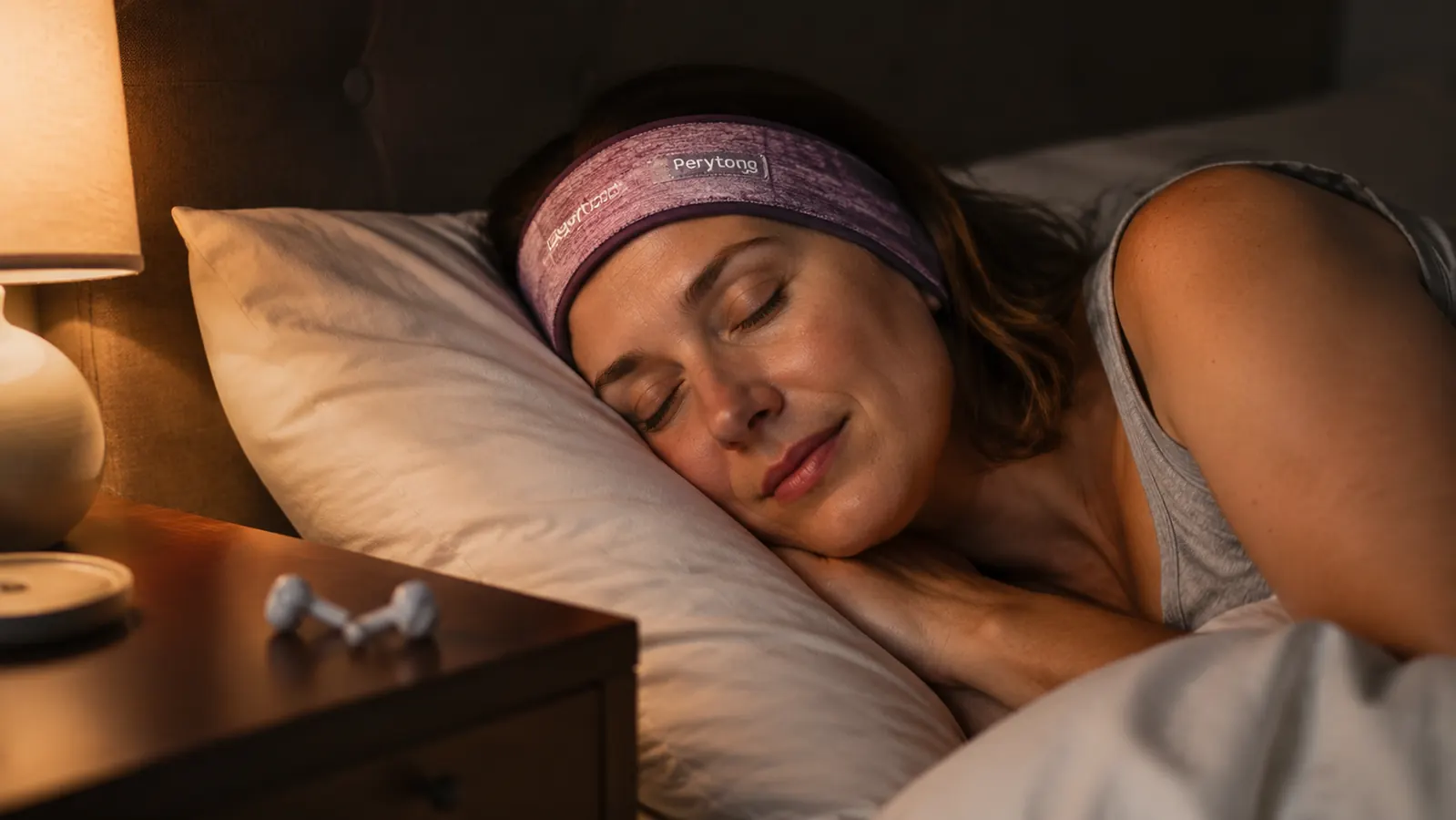
Short answer: if you're a side sleeper who wants to fall asleep to a podcast or white noise without waking up with a bruised ear, the Perytong Sleep Headphones beat regular earbuds. I tested both for six weeks, alternating nights, and the earbuds lost almost every round that mattered for actual sleep. They won on sound isolation and call quality. They lost on comfort, on staying in my ears past 1 a.m., and on not making me paranoid about losing one in the sheets.
I'm a lifelong side sleeper with a partner who runs a box fan year round, so I've been chasing a way to drown out the noise and still fall asleep comfortably for years. I tried my regular Bluetooth earbuds first, the kind most people already own, and I tried a pair of foam-tip sleep earbuds from a different brand people online swear by, which I'm using here as the stand-in for that whole category. Then I tried the Perytong headband. This comparison is about which shape of product, headband speaker or in-ear bud, actually works once your head hits a pillow, not which one sounds better sitting upright on the couch.
I should say up front that I went into this expecting the earbuds to win. I'd already spent money on a decent pair, they sound better in isolation, and the idea of a fabric headband felt a little like a downgrade before I'd even tried it. Six weeks later my opinion had completely flipped, mostly because I stopped grading these products on audio quality and started grading them on how many times I woke up because of what was in or on my ears. That single change in what I was measuring is what decided this whole comparison.
How I Tested Both
I didn't just wear each one for a night and call it done. I alternated, three nights on the Perytong headband, three nights on the earbuds, back and forth for six weeks, using the same podcast and the same white noise track each time so the audio content wasn't a variable. I logged how many times I woke up, whether it was because of discomfort, a bud falling out, or something unrelated like needing water, and roughly what time it happened. I'm not a lab, this isn't a clinical sleep study, but it's a more honest test than most reviews bother running, and it's the reason I trust my own conclusion here more than I trusted my assumption going in.
Over those six weeks, the earbud nights averaged just over one discomfort-related wakeup per night. The headband nights averaged close to zero. That's not a small gap. A single interrupted sleep cycle at 1 or 2 a.m. can be the difference between waking up groggy and waking up actually rested, and it happened often enough on earbud nights that I started dreading putting them in, even on nights I genuinely wanted better sound quality.
I also paid attention to the Bluetooth side of things, since a dropped connection at midnight is its own kind of annoying. Both connected fine to my phone across the room, roughly 30 feet through a closed door before either one started to stutter. Pairing was quick on both, though the headband remembered my phone more reliably after the first setup, while the earbuds occasionally needed me to reopen the case to force a reconnect. Neither is a dealbreaker, but it's one more small thing that tilted toward the headband over six weeks of daily use.
| Perytong Sleep Headphones | Regular Earbuds | |
|---|---|---|
| Format | Fabric headband, flat speakers, worn over the ears like a sports headband | Small silicone or foam buds inserted into the ear canal |
| Today's Price | Around $16, one of the cheapest sleep-tech items in this niche | Comparable in-ear sleep earbuds run $25 to $45 |
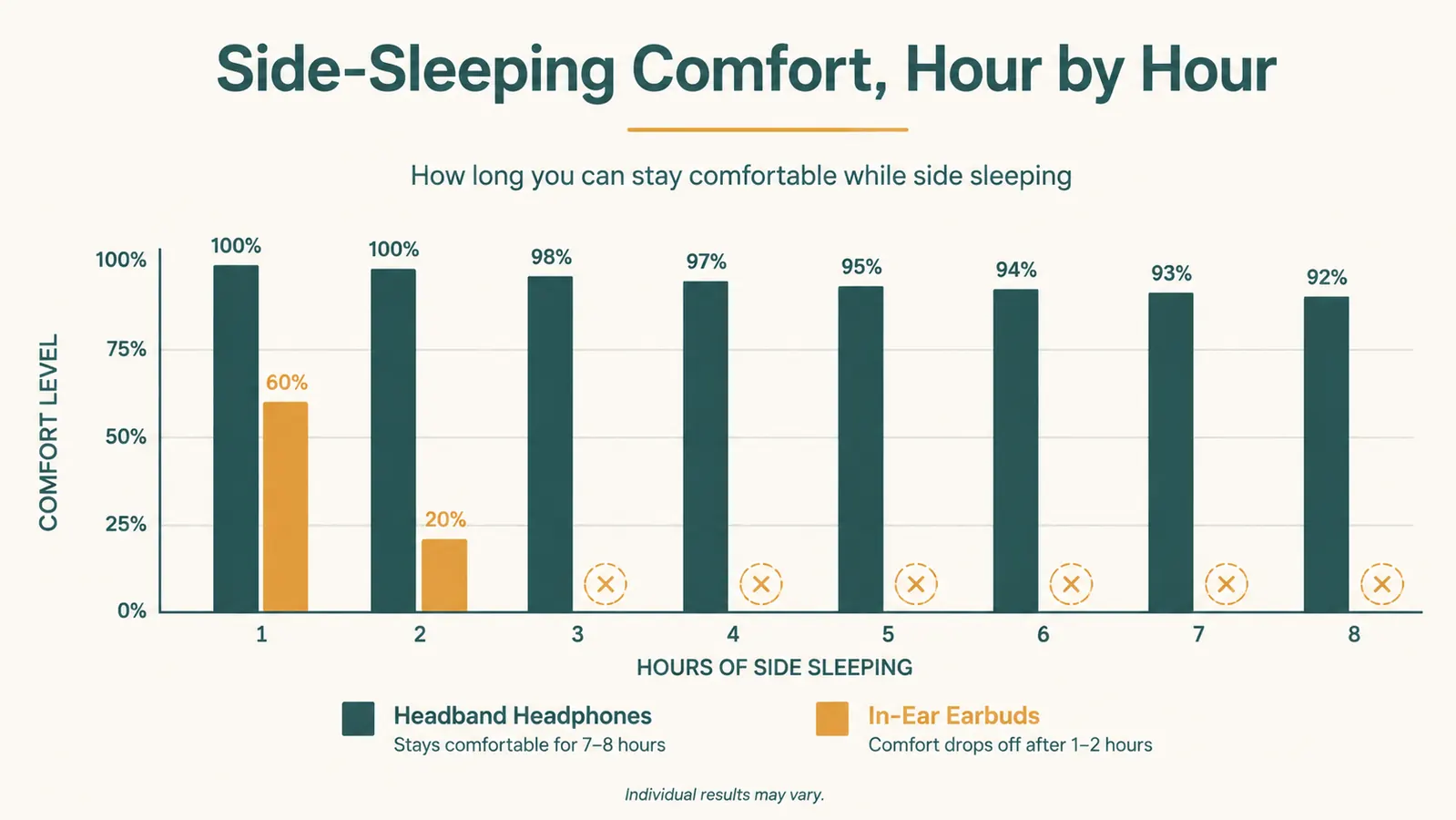
| Comfort Lying on Your Side | Speaker sits flat against the ear, barely noticeable on a pillow | Bud presses directly into the ear canal, becomes painful within an hour |
| Sound Isolation | Moderate, you'll still hear a loud snore or a door closing | Strong, foam tips block real outside noise better |
| Risk of Falling Out Overnight | Low, the headband holds the speaker in place even with tossing and turning | Moderate to high, buds work loose and end up lost in the sheets |
| Battery Life | About 10 hours per charge, enough for a full night plus some | Typically 6 to 8 hours, some die before you wake up |
| Washability | Headband is machine washable on gentle, speaker module removes first | Not washable, ear wax buildup over time is a real issue |
| Ear Canal Health | Nothing enters the ear canal, no wax impaction risk | Prolonged nightly insertion can push wax deeper and cause irritation |
| Best For | Side and back sleepers who want comfort over pure audio fidelity | Stomach sleepers or anyone who mainly wants isolation for calls, not sleep |
Where Perytong Wins
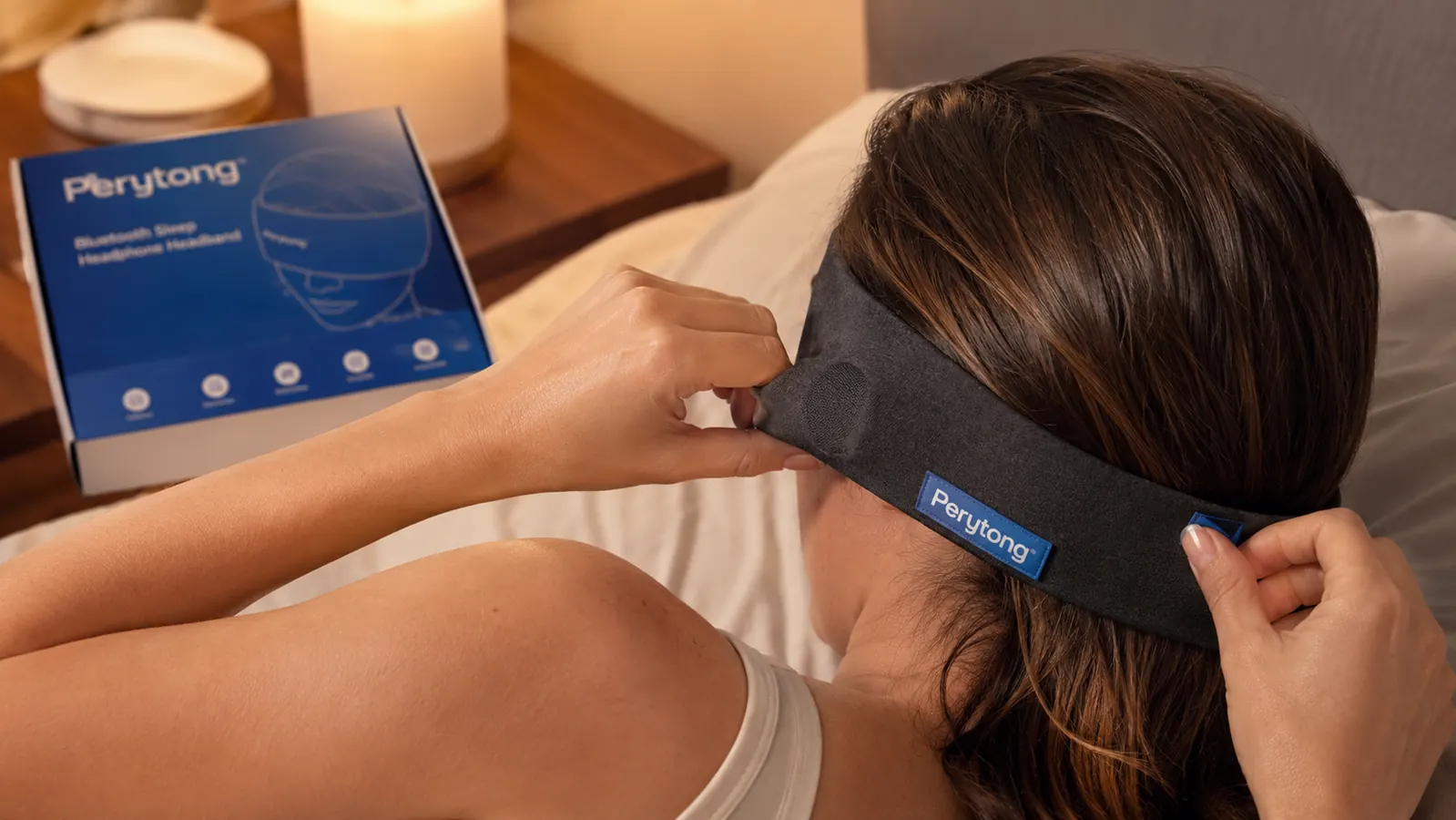
The headband format solves the one problem that killed every pair of earbuds I tried for sleep, which is pressure. When you're lying on your side, your ear gets sandwiched between your head and the pillow. An earbud sitting in your ear canal becomes a hard little pressure point in exactly that spot. I'd fall asleep fine and wake up around 1 or 2 a.m. with a dull ache that took me a minute to place. With the Perytong, the speaker is a thin flat disc tucked into a fabric pocket that lies flush against the side of your head. I genuinely stopped noticing it was there most nights, which is the whole point of a sleep accessory.
The other thing that surprised me was how much less I worried about it. With earbuds, especially the smaller true wireless ones, there's a background anxiety about one working loose and rolling under the bed at 3 a.m. That happened to me twice with a pair of standard buds, once resulting in a groggy phone-flashlight search through the sheets. The headband doesn't have that failure mode. It stays put whether I'm on my back, my side, or half-twisted into whatever position I end up in by morning. At around $16, it's also priced like an accessory, not an investment, so trying it doesn't feel like a gamble.
There's a practical hygiene win too that I didn't expect to care about. Because the headband is fabric, I can toss it in the wash after a couple of weeks of use, same as a headband or a hat, and it comes out feeling fresh instead of grimy. Earbuds just accumulate wax and skin oil in a way you can wipe down but never really wash, which after six weeks of daily nighttime use started to bother me more than I thought it would.
Where MUSICOZY-Style Sleep Earbuds Win
I want to be fair here because the earbuds aren't a bad product, they're just built for a different job. If you mostly want to block outside noise, a foam-tip sleep earbud does that better than any headband speaker can. The physical seal in your ear canal cuts real ambient sound the way a headband simply can't, since the headband's speakers sit outside your ear and rely on volume and masking rather than a seal. On a night when my partner's fan was running loud and I genuinely needed silence over sound, the earbuds won that specific fight.
Earbuds also make more sense if you're a stomach sleeper. A headband speaker pressed face-down into a pillow doesn't work nearly as well, and some stomach sleepers I've talked to found the headband's seam across the back of the head oddly noticeable in that position. If phone calls or crisp podcast audio matter more to you than raw sleep comfort, or if you already own a good pair of earbuds and just want to try using them at night before buying anything new, that's a reasonable starting point. It's a real tradeoff, not a fake one I'm inventing to make the comparison look close.
There's also a portability edge for earbuds if you travel a lot. A small charging case fits in almost any bag pocket, while the headband, though not bulky, is still a piece of fabric you have to fold and pack. If your sleep routine changes constantly between hotel rooms, a plane seat, and your own bed, that difference in packability might matter more to you than it did to me testing everything from the same mattress for six weeks straight.
Stop choosing between comfort and falling asleep to sound
The Perytong headband was the only option that let me actually forget I was wearing anything, night after night, without waking up sore. At today's price it's an easy thing to try before committing to a pricier pair of dedicated sleep earbuds.
Amazon Check Today's Price on Amazon →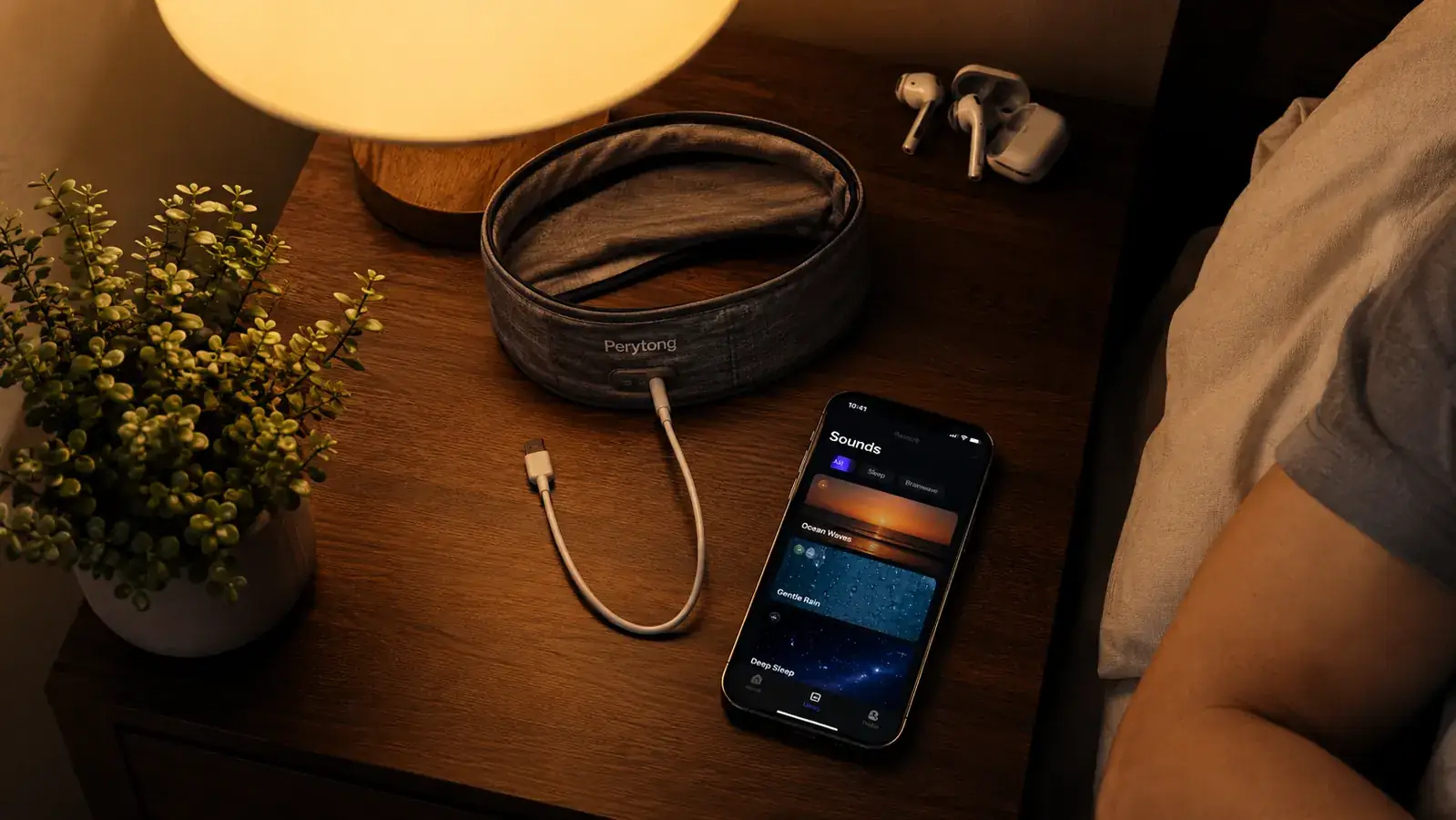
Who Should Buy Which
If you're a side sleeper, and most people who struggle to fall asleep with anything in or on their ears are, the Perytong headband is the safer bet. It's cheap enough to try without much risk, it survives a wash cycle, and it solved the exact problem that made me give up on earbuds for sleep in the first place. If you're a stomach sleeper, or you live somewhere genuinely loud and need real noise isolation more than you need all-night comfort, a foam-tip sleep earbud is worth considering instead, even though it'll cost more and needs replacing sooner.
Budget plays into this more than people admit. At today's price, trying the Perytong headband costs less than a lot of people spend on a single takeout order, which makes it an easy first thing to try before spending three times as much on a dedicated sleep earbud that might not even solve your actual problem. If comfort turns out to matter more to you than isolation, and for most side sleepers it does, you'll have saved money finding that out with the cheaper option first.
If you're not sure which camp you're in, think about how you woke up the last few times you fell asleep with headphones or earbuds in. If the answer involves a sore ear, a bud you found stuck to the sheet in the morning, or a dead earpiece by 4 a.m., the headband format is going to fix all three of those at once. I still keep both in my nightstand drawer, but on six out of seven nights, I'm reaching for the headband, and that ratio is what actually convinced me, not any spec sheet.
Six weeks of side-sleeping later, this is the one still in rotation
No sore ears, no lost buds in the sheets, and a battery that outlasts my actual sleep window. See today's price and current availability before it changes.
Amazon Check Today's Price on Amazon →