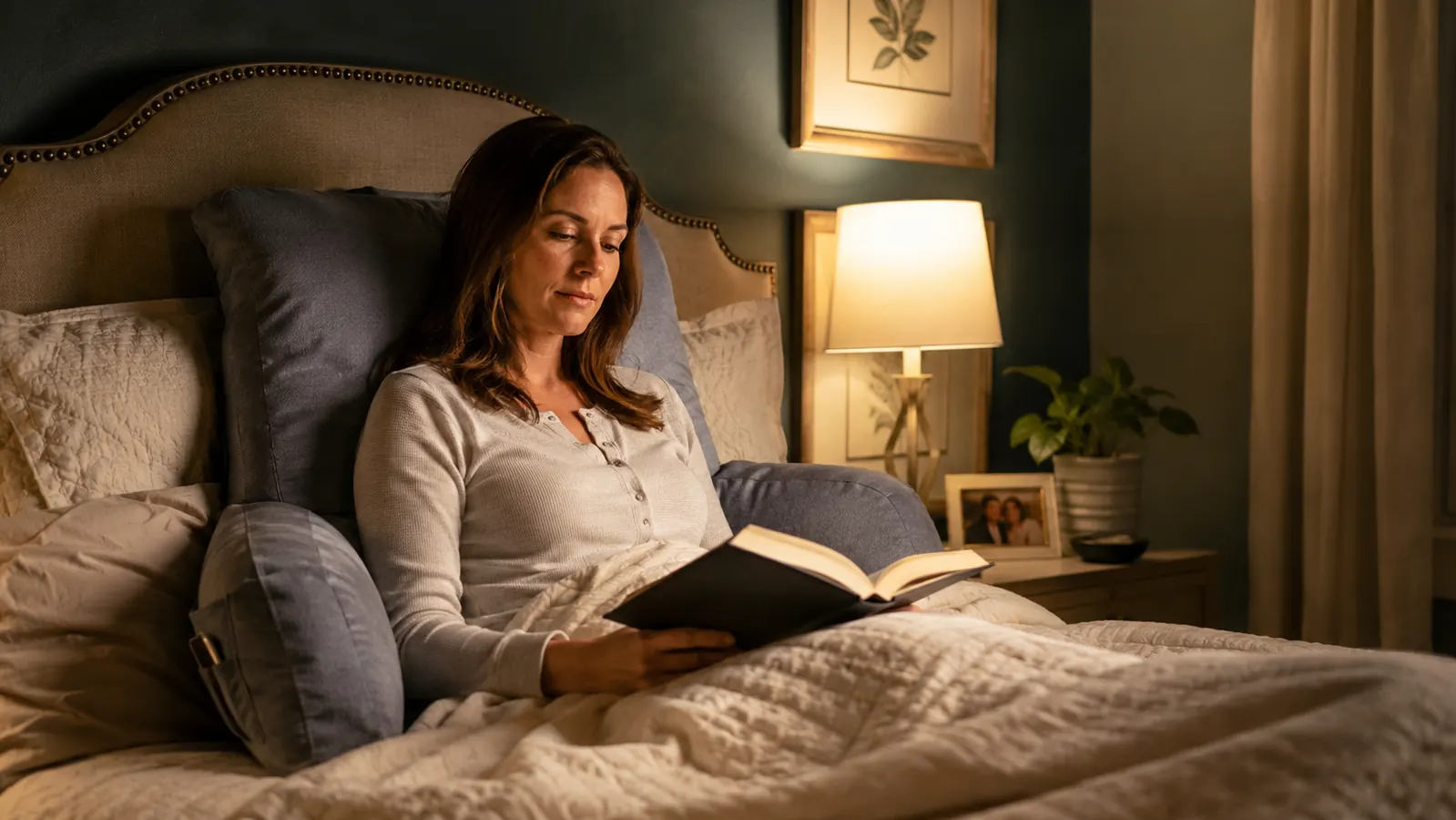
For years, reading in bed meant one of two things for me: propping three regular pillows against the headboard and watching them slowly collapse into a lumpy heap, or giving up and reading lying flat on my side until my neck cramped. Either way, I was lucky to get fifteen minutes in before I shifted, sighed, and put the book down for the night. My lower back would start a dull ache right around the belt line, the same spot that used to bother me after a long shift on my feet, and it always killed whatever momentum I had going in a book.
I didn't realize how much of that was a setup problem, not a me problem, until I actually built a proper reading station around a real bed-rest pillow, the Sasttie reading pillow with arms. What follows is the exact process I use now, step by step, including the parts I got wrong the first few times before I landed on something that actually holds up night after night.
Stop rebuilding your pillow fort every night
A reading pillow with arms does what three stacked regular pillows can't, it gives your back, elbows, and neck actual structure. See today's price on the Sasttie reading pillow before your next chapter.
Amazon Check Today's Price on Amazon →Step 1: Get the right pillow, not more pillows
My first mistake for years was thinking the fix was volume. More pillows, stacked higher, would surely hold me up. It never worked, because regular sleeping pillows are soft and shapeless. They compress the second you lean back, and within a few minutes you've sunk down into a slouch with your chin dropping toward your chest. That's the exact position that puts strain on your lower back and neck, and it's the position I'd catch myself in almost every single night around page ten.
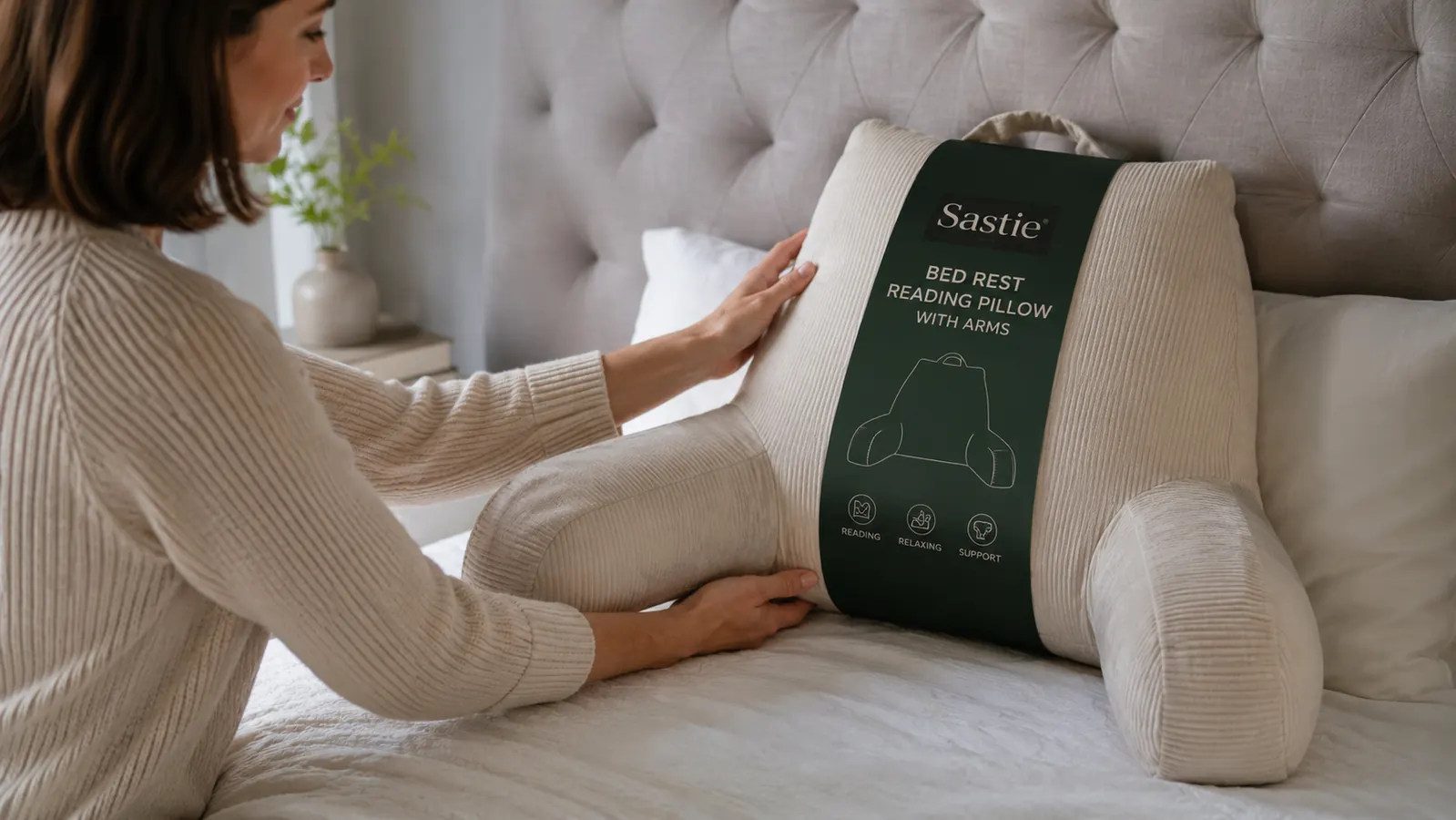
A dedicated bed-rest reading pillow is built differently. The Sasttie pillow has a firm, upright back panel and two padded arms that flank your sides, so instead of collapsing under your weight it actually holds its shape and keeps your spine in a stable, upright position. The first night I used it, I noticed the difference within a couple of minutes. My back had something to lean into the whole time instead of slowly sinking, and I didn't have to keep tugging pillows back into place every few pages the way I used to.
If you're going to fix one thing in your setup, fix this one. Everything else in this guide works better once you're not fighting your pillows just to stay sitting up. I'd tried a cheaper foam wedge before this one, and it held its shape for about a month before it started flattening in the middle. The firmer fill in the Sasttie pillow hasn't done that after several months of nightly use.
Step 2: Position it against a solid headboard, not just the wall
I made a second mistake early on, which was propping the reading pillow directly against a bare wall with no headboard behind it. It works in a pinch, but the pillow tends to slide down the wall a little at a time as you shift, and you end up scooting forward to compensate. Against a solid headboard, the pillow has something firm to brace against and stays put for the whole session, even if I'm reading for an hour or more on a weekend night.
If you don't have a headboard, the next best option is pushing the pillow into the corner where the mattress meets the wall, so it's wedged in rather than free-standing. I tried both setups for about two weeks each, and the corner wedge was noticeably more stable than flat against an open wall. Either way, avoid setting the pillow up in the open middle of the bed with nothing behind it. It just becomes one more thing to chase down at midnight.
Once the pillow is anchored, sit all the way back so your lower back is against the base of the pillow, not perched near the front edge. This sounds obvious, but I used to sit too far forward out of habit from years of stacking regular pillows, and it took a conscious effort to actually scoot back and let the arms of the pillow support my elbows instead of leaving them to dangle at my sides.
Step 3: Support your knees, not just your back
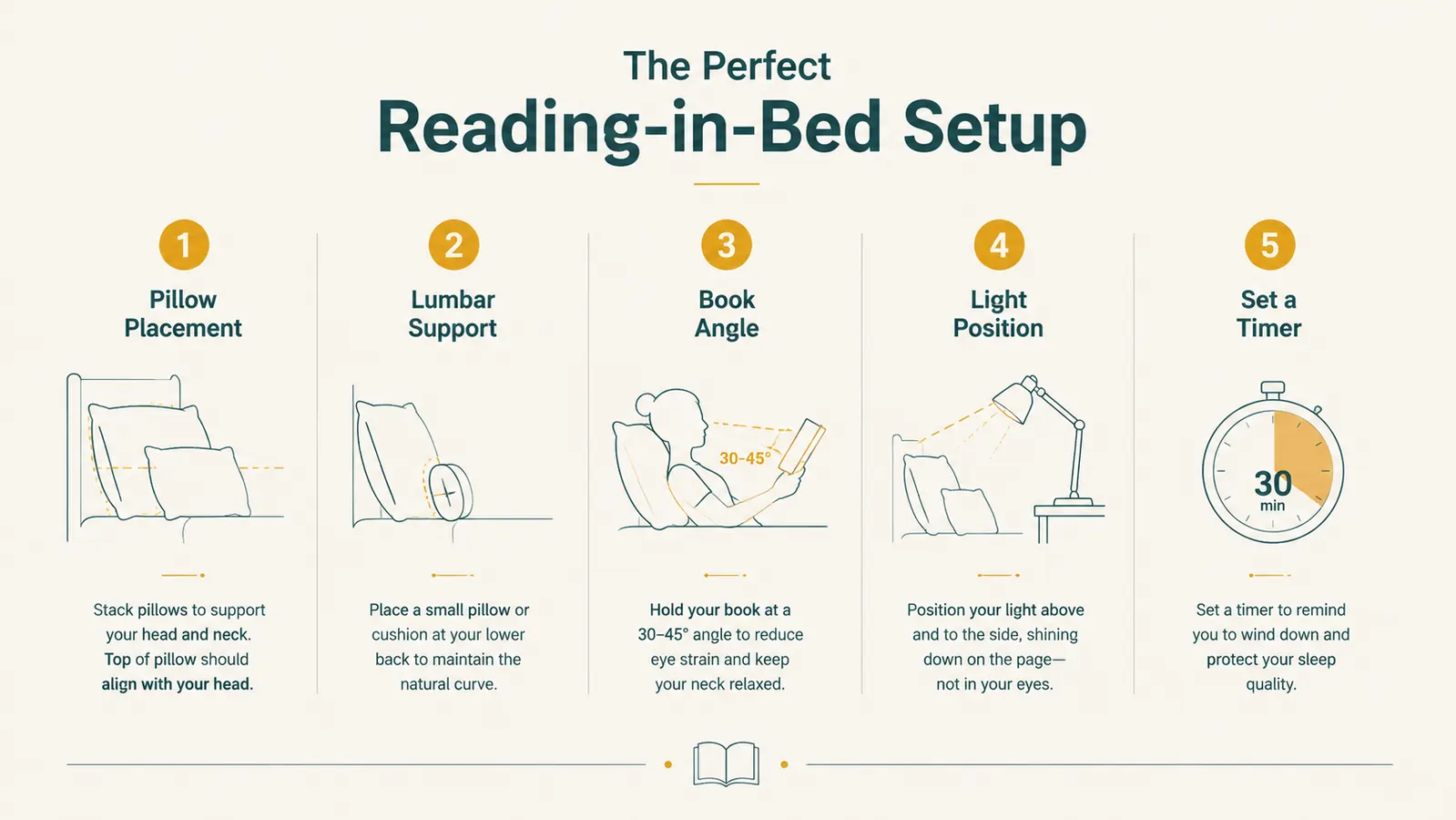
This is the step almost nobody talks about, and it made a bigger difference than I expected. Sitting upright in bed with your legs flat and straight puts a subtle pull on your lower back, because your hamstrings are stretched tight the whole time. Bending your knees slightly and slipping a small pillow or a rolled-up blanket underneath them takes that pull off your lower spine and lets your lower back settle instead of staying braced.
I use a thin throw pillow under my knees now, and it's the difference between reading comfortably for forty-five minutes and starting to shift around after twenty. If you already own a knee pillow or a small bolster from elsewhere in your bedroom, this step costs you nothing. It's just a matter of remembering to use it, since it's easy to sit down, grab your book, and forget the one small pillow that makes the whole rest of the setup work better.
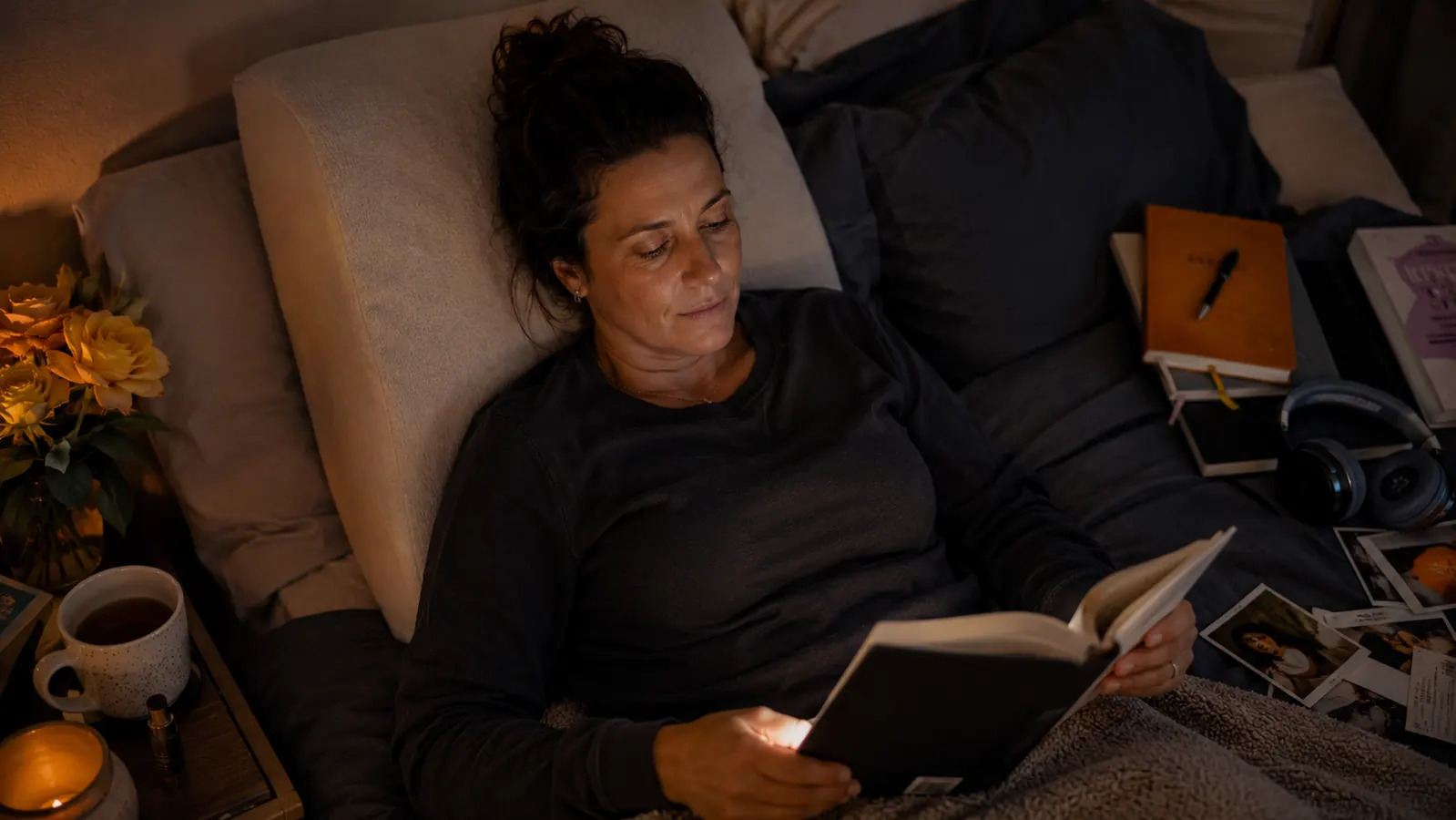
Step 4: Get the book angle right so you're not craning your neck
Once your back is supported, the next thing that wrecks a reading session is neck position. Holding a book flat on your lap forces you to tip your chin down for long stretches, which is the same forward-head posture that gives people neck and shoulder tension from staring at phones all day. I didn't connect the two until a physical therapist friend pointed out that my nightly reading posture was basically identical to bad phone posture, just with a paperback instead of a screen.
The padded arms on the Sasttie pillow actually help here in a way I didn't expect. Resting my elbows on the arms lets me hold the book higher and closer to eye level instead of low in my lap, so my neck stays in a more neutral position for the whole chapter. If you're reading on a tablet, propping it against a small stand or even a folded towel on your lap achieves the same thing, get the text up near eye level instead of down low, so your chin stays level instead of tucked toward your chest.
Step 5: Set a light that doesn't force you to hunch toward it
The last piece is lighting, and it's one I underestimated for a long time. A dim overhead light or a lamp positioned too far away makes you lean forward to see the page clearly, which undoes all the posture work from the steps above. A small clip-on reading light attached to the book itself, or a bedside lamp with an adjustable arm positioned just over your shoulder, lets you stay leaned back against the pillow while still getting enough light on the page without straining your eyes.
I switched to a clip light a few months ago mostly because my partner sleeps earlier than I do, but it had the side benefit of letting me stay fully reclined against the pillow instead of leaning toward a lamp across the room. Small change, but it added up with everything else. I keep the light angled down at the page rather than pointed toward my face, which also makes it easier to fall asleep afterward if I read right up until lights out.
How Long It Takes to Feel a Difference
I want to be honest about the timeline here, because I went in expecting an instant fix and it wasn't quite that. The first night, the biggest thing I noticed was that I wasn't constantly readjusting pillows every few minutes, which on its own made reading feel less like a chore. The actual back pain relief took closer to a week of consistent use before I stopped noticing any soreness the next morning.
By the second week, reading in bed had gone from something I dreaded to something I actually looked forward to at the end of the day. I went from finishing maybe one book a month to closer to two, simply because I could sit comfortably long enough to actually get absorbed in a chapter instead of clock-watching until my back started complaining. If you've been putting off fixing this because you assume it's a small thing, it adds up faster than you'd think once the discomfort is out of the way.
I also pay attention to the fabric now, which sounds minor until you've slept hot before. The cover on the Sasttie pillow is a breathable cotton blend, and I noticed I wasn't getting warm and sticky against it the way I did with an older velvet-covered wedge pillow I'd tried before. If you tend to run warm at night, that's worth checking before you buy anything, since a pillow that traps heat against your back will have you shifting away from it within twenty minutes no matter how supportive it is.
What Else Helps
A few smaller things rounded out the setup for me. I keep a lumbar-height throw pillow nearby for nights when I'm reading longer than usual, tucked between my lower back and the base of the reading pillow for a bit of extra push forward. I also set a soft timer on my phone, not an alarm, just a reminder to check in on my posture every twenty minutes or so, since it's easy to slowly slide out of a good position without noticing until you're already slouched again.
And I've started keeping the reading pillow on the bed permanently instead of storing it in a closet, because the honest truth is that if it takes effort to set up, I skip it on tired nights. Having it already in place, arms open and ready, removes that excuse entirely. It sits at the head of the bed now the same way a regular pillow would, so reaching for it takes zero extra steps after a long day. That's probably the single biggest reason this setup stuck when the pillow-stacking version never did. There's no friction left between deciding to read and actually being comfortable enough to do it for more than a few minutes.
I didn't need to read less to protect my back. I needed something firm enough to actually hold me upright while I did.
Read as long as you want, without the backache after
This entire setup starts with having a pillow that actually holds its shape instead of collapsing under you. Check today's price on the Sasttie reading pillow and see how much longer you can comfortably read tonight.
Amazon Check Today's Price on Amazon →